 Skip to content


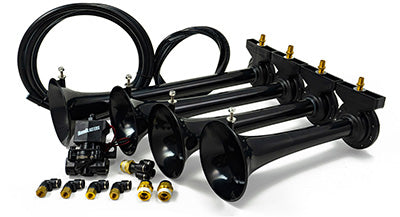
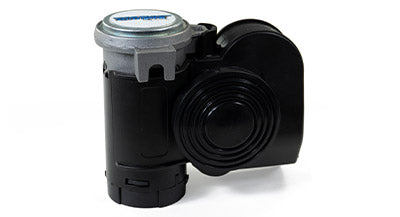
SHOCKER XL
Sound Sample
0:00 0:00

Horn Audio Samples
Listen to and download real audio samples of every horn we carry — compare tones, pitch, and impact before you choose your kit.
From sharp, high-pitched air horns to deep, resonant train horns that replicate a locomotive, each horn has its own personality. Whether you're shopping for a truck, car, SUV, or boat, use these clips to pick based on sound — not just specs.
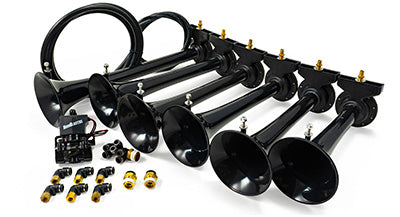
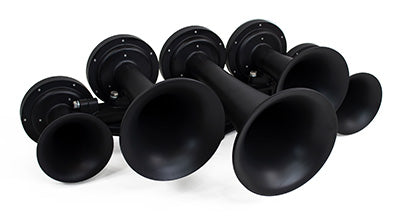
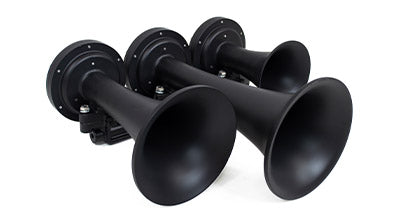
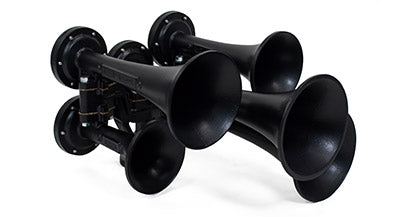
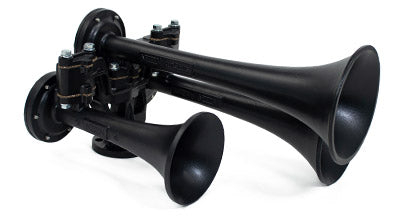
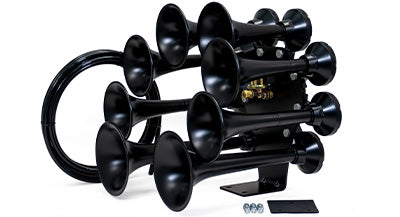
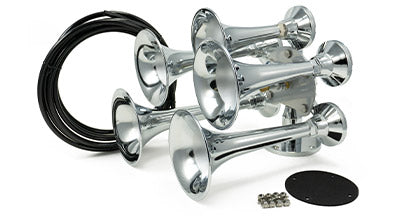


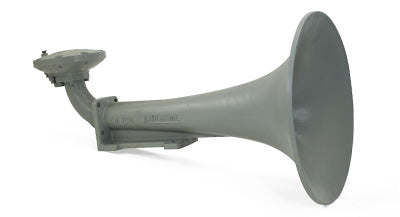
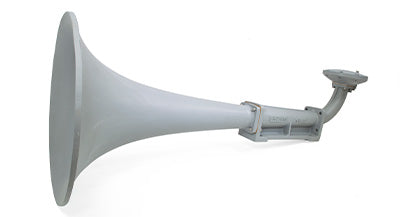
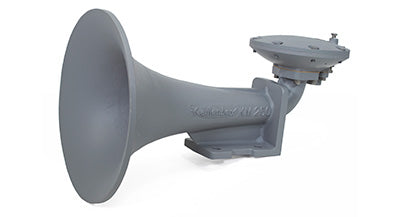
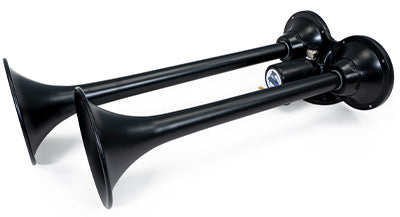

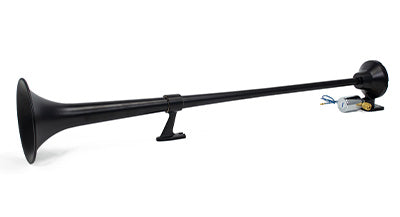
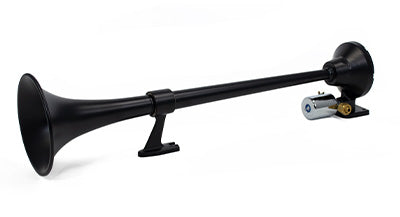
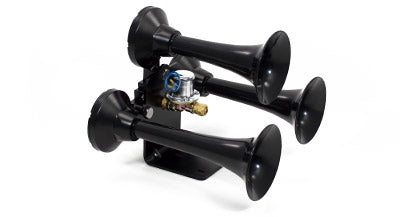
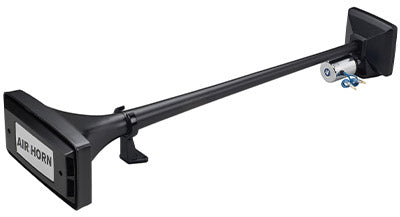

No horns match your search.
All files are property of HornBlasters Inc. Copyright 2026. Personal use is welcome. Commercial use requires written permission — contact media@hornblasters.com for usage inquiries.
The loudest train horns available are the Nathan Airchime K5 and the King 5, both producing around 149.4 decibels. They're matched closely by the Leslie RS-5T. Just a step behind are our Shocker series horns — the Shocker XL produces around 147.7 decibels and remains a customer favorite for powerful sound and dependable performance.
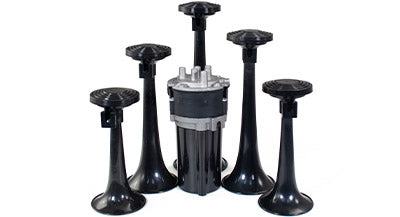
Air horns and train horns both use compressed air. Train horns require at least three bells producing distinct notes tuned together to create the harmonized, multi-tone locomotive sound. Air horns come in a variety of tones and trumpet configurations, so having three or more bells alone doesn't make an air horn a train horn—the tuning matters too. Compare the air horn and train horn sound samples above to hear the difference before choosing your horn or kit.
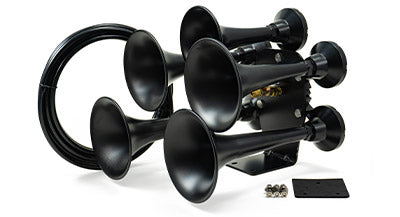
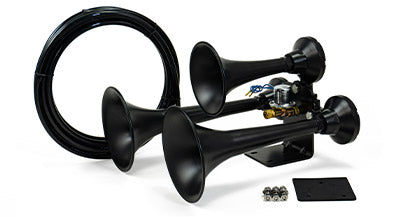
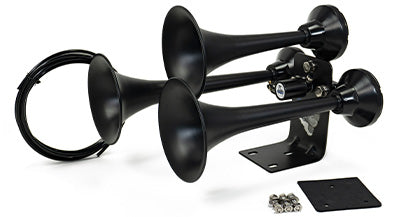
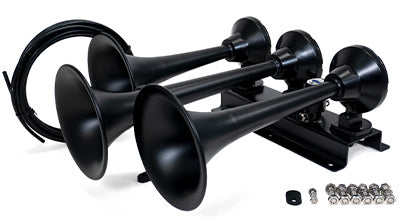
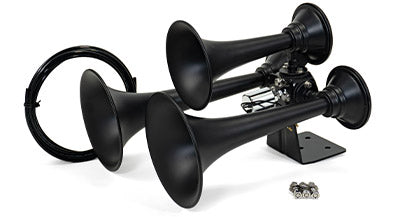
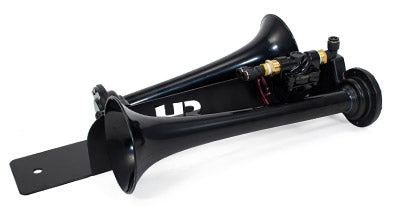
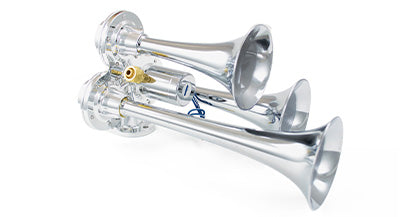
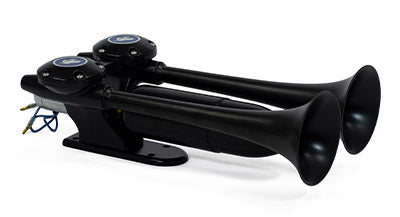
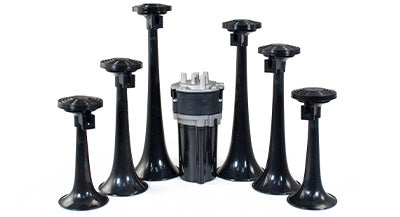
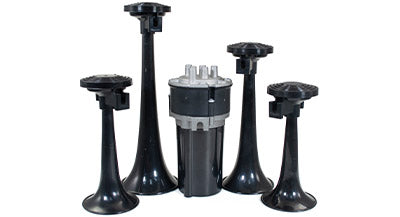
Our most popular train horn is the Shocker XL, featured in Conductor's Special train horn kits including Spare Tire Delete kits. It produces around 147.7 decibels and offers flexible mounting with individually mounted bells.
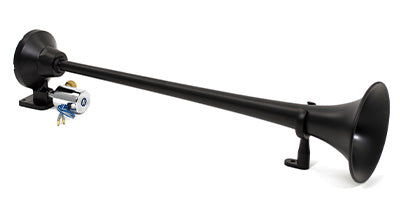
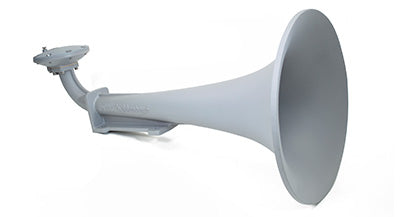
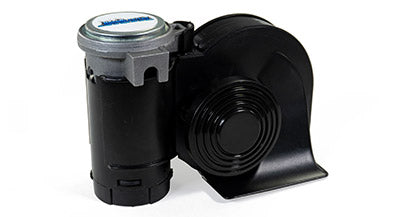
The Kahlenberg KM-85 is a large marine air horn that produces a deep, low-frequency blast. For vehicle applications, our Rocker Air Horn is the loudest air horn in the HornBlasters lineup built specifically for trucks and cars.
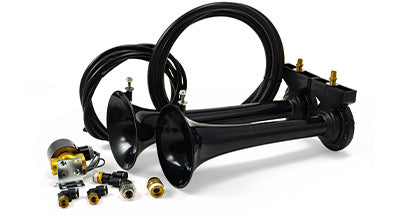
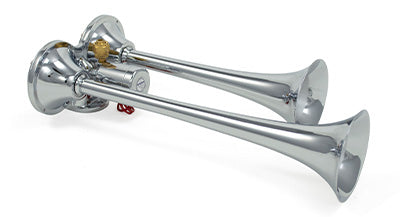
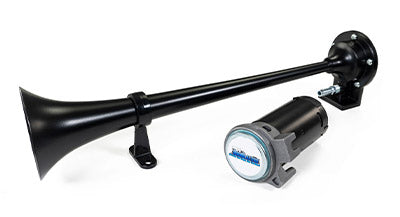
An air horn produces a loud, piercing sound — a sharp, blaring honk created when compressed air vibrates a diaphragm or reed and amplifies through a flared trumpet. Preview samples above for horns like the Rocker, 2-Chime, and Safety Horn.
Factory car horns produce a honk using a single horn or a pair of high- and low-tone horns, depending on the vehicle. The exact tone and loudness vary by horn and vehicle. Aftermarket and musical horns range from classic honks to multi-tone tunes like our Dixie and La Cucaracha musical horns. Listen to the samples above before you buy.
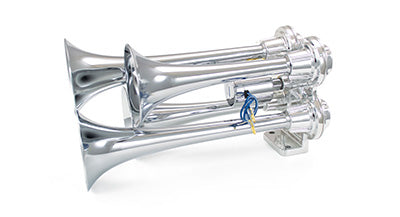
Aftermarket truck horns vary in tone and loudness, from sharp air horn blasts to deep, commanding honks. Multi-trumpet train horns like the Shocker XL deliver the layered sound traditionally associated with locomotives.
Boat horns can produce anything from a sharp honk to a deep, low-pitched blast, depending on the horn. Larger ship horns such as the Kahlenberg KM-85 produce a deep, low-frequency tone. Listen to the marine horn samples above to compare their sound.
A locomotive train horn can be heard at least 2 miles away under favorable conditions, and sometimes farther. The actual distance depends on the horn’s output and mounting position, background noise, terrain, buildings, and weather.
Yes, you can hear a locomotive train horn from at least 2 miles away under favorable conditions, and sometimes farther. Background noise, buildings, terrain, wind, and the horn’s output and mounting position affect how far the sound carries.
A train honks at night to warn people that it is approaching, just as it does during the day. In the U.S., horns are generally required at public railroad crossings unless a quiet-zone exception applies; engineers can still sound them for safety in quiet zones. Train horns can also sound louder at night when atmospheric conditions bend sound back toward the ground, allowing it to carry farther.
The air horn sound in hip hop is a sample used to accentuate drops and transitions. It traces back to dancehall and reggae live performances where horns energized crowds.
Two short blasts from a train horn acknowledge a signal under the General Code of Operating Rules (GCOR), unless that signal has a different prescribed response. Two long blasts mean release the brakes and proceed. The length and pattern of the horn blasts matter, and meanings can vary by railroad and country.
Three short blasts from a train horn mean back up when the train is stopped under the General Code of Operating Rules (GCOR). They can also acknowledge a hand signal to back up. This refers to reverse movement; the meaning depends on the blast pattern and the railroad’s operating rules.
In the U.S., two long blasts, one short blast, and one long blast are the standard train horn warning for an approaching public railroad crossing. The pattern is repeated or prolonged until the lead locomotive occupies the crossing. Quiet zones and certain operating exceptions can change when or how the horn is sounded.
Trains "honk" their horns. The device is a horn; the action is honking.
Trains honk their horns, and a short horn blast can also be called a toot. Both terms can describe a train horn used to warn people of the train’s presence and movement.