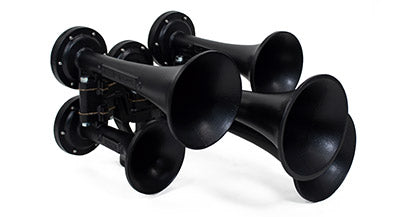
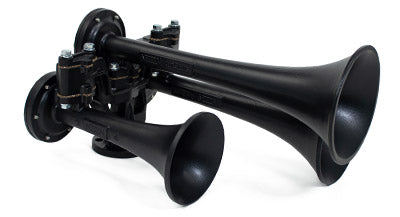
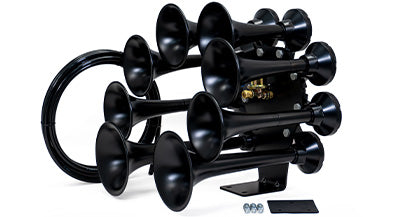
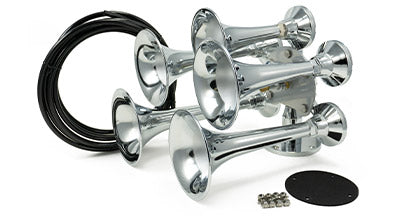
TRAIN HORN & AIR HORN SOUND SAMPLES

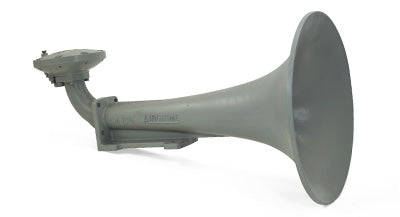
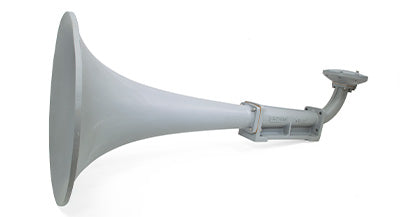
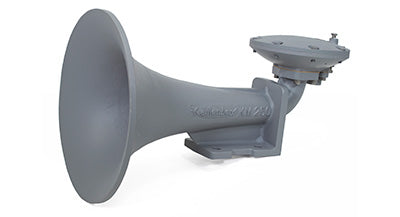
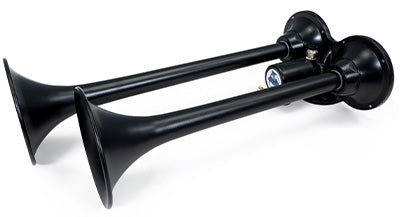
Looking for that unmistakable air horn sound or train horn sound? You’re in the right place. Listen to and download real audio samples of every horn we carry, so you can compare tones, pitch, and overall impact before deciding which one fits your build.

We carry everything from sharp, high-pitched air horns to deep, resonant train horns that replicate the authentic sound of a locomotive. Each horn has its own personality. Some deliver a fast, punchy honk, while others hit you with a long, thunderous blast. These audio clips give you a true sense of what to expect from each setup, even though the full loudness can only be experienced in person.

Whether you're shopping for a horn to install on your truck, car, SUV, or even a boat, these samples are designed to help you choose based on sound, not just looks or specs. Use this page to preview your options before picking a kit that makes the right kind of noise.
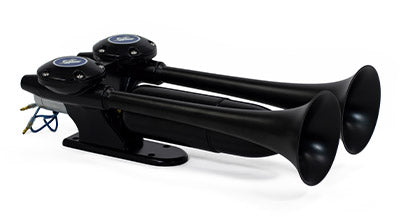
**All files are property of HornBlasters Inc. Copyright 2025. Contact media@hornblasters.com for usage inquiries.**

POPULAR QUESTIONS

WHAT IS THE LOUDEST TRAIN HORN AVAILABLE?

The loudest train horns available are the Nathan Airchime K5 and the King 5, both producing around 149.4 decibels. They're matched closely by the Leslie RS-5T, with all three well-regarded in the railroad and aftermarket industries for their exceptional power. Just a step behind these leaders are our Shocker series horns. The Shocker XL, for example, produces around 147.7 decibels. These horns are a favorite among our customers, known for their powerful sound and dependable performance.
WHAT'S THE DIFFERENCE BETWEEN AN AIR HORN AND A TRAIN HORN?

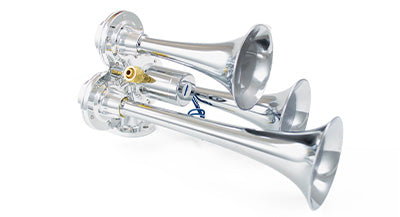
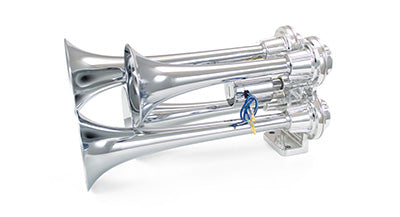
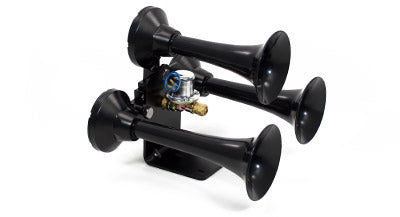
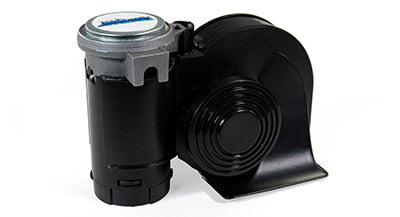
Air horns and train horns both use compressed air to produce sound, but they differ in tone and structure. Air horns typically use one or two trumpets to produce a sharp, attention-grabbing honk in the 130 to 145 decibel range. Train horns use three or more trumpets tuned to create the harmonized, multi-tone sound traditionally associated with locomotives, often producing around 150 decibels. Both can be installed on virtually any 12V or 24V vehicle, from cars and trucks to boats and even golf carts. The right choice comes down to whether you want a sharp commanding honk or that deeper, locomotive-style blast.

WHAT IS THE MOST POPULAR TRAIN HORN?

Our most popular train horn is the Shocker XL, featured in our Conductor's Special train horn kits, including our Spare Tire Delete kits. Renowned for its powerful sound and durability, the Shocker XL produces around 147.7 decibels, putting it just behind locomotive-grade options like the Nathan Airchime K5 and the King 5. Its versatility and dependable performance make it a top choice among truck and SUV owners looking to make a real statement. The flexibility of individually mounted bells also allows for various mounting configurations to suit any vehicle.

WHAT IS THE LOUDEST AIR HORN?

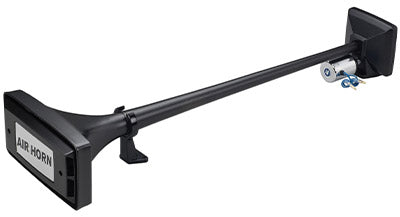
The Kahlenberg KM-85 is considered the loudest air horn available, designed for marine and industrial applications where maximum sound penetration and clarity are essential. It can produce sound levels capable of cutting through the highest-noise environments, making it ideal for ships, harbors, and large vessels, though some customers have successfully mounted them on trucks and other vehicles for an unmatched aftermarket sound. For a more compact option, our Rocker Air Horn is the loudest air horn in the HornBlasters lineup that's specifically built for vehicle applications.

WHAT SOUND DOES AN AIR HORN MAKE?

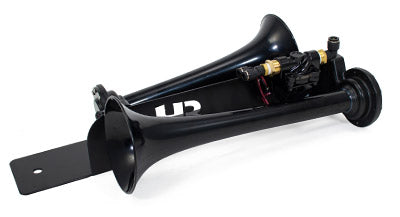
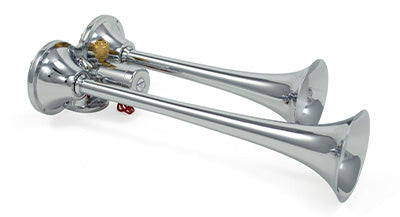
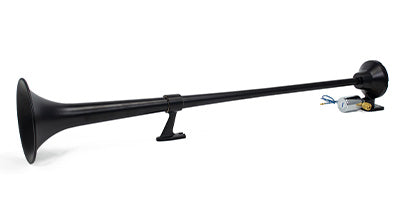
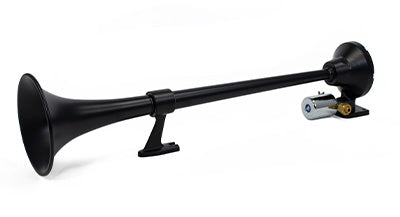
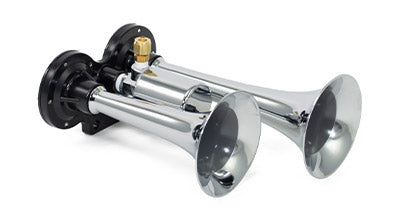
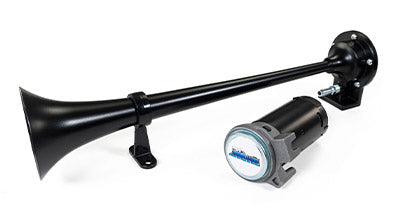
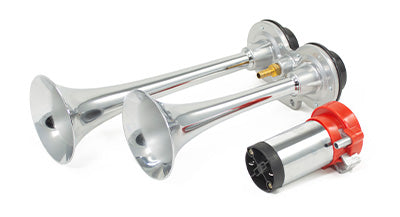
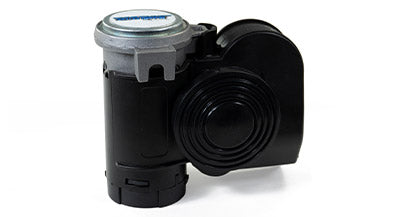
An air horn produces a loud, piercing sound often described as a sharp, blaring honk. The sound is created when compressed air vibrates a diaphragm or reed inside the horn, then amplifies through a flared trumpet. Air horns typically use one or two trumpets to produce a higher-pitched, attention-grabbing tone, distinct from the deeper, multi-tone sound of train horns. You can preview real air horn sounds by listening to the audio samples above for horns like the Rocker, 2-Chime, and Safety Horn.

HOW MANY MILES AWAY CAN YOU HEAR A TRAIN HORN?

You can typically hear a train horn from 3 to 5 miles away under normal conditions. This range can extend further in rural areas with less ambient noise or during certain weather conditions that carry sound more effectively.

WHAT IS THAT AIR HORN SOUND IN HIP HOP?

The air horn sound in hip hop is a sample or effect that has been widely used in the genre to accentuate drops, highlight transitions, or emphasize moments in the music. This sound has become iconic in hip hop and DJ culture, symbolizing celebration, excitement, and attention-grabbing. Its usage can be traced back to dancehall and reggae influences, where it was originally used in live performances to energize the crowd.

CAN I DOWNLOAD THESE SOUND SAMPLES?

Yes, every horn sound on this page is available for free personal download. Click the "Download" button next to any audio sample to save the MP3 file directly to your device. The files are named after each horn (like shocker-xl-train-horn-hornblasters.mp3) so you can keep them organized for easy reference. Use them to share with friends, compare sounds offline, or save your favorites while you decide which kit to install.

All horn audio samples on this page are the copyrighted property of HornBlasters Inc. Personal use is welcome, but commercial use, including using these recordings in advertising, marketing materials, product listings, social media promotions, or any other commercial context, is strictly prohibited without written permission. Unauthorized commercial use of HornBlasters audio samples is a violation of copyright and will be pursued. For licensing inquiries or usage permissions, contact media@hornblasters.com.

WHAT DO 2 SHORT BLASTS FROM A TRAIN HORN MEAN?

Two short blasts from a train horn are a signal indicating that the train is about to start moving or is continuing its movement after a stop. This signal is part of a standardized code used by trains to communicate with rail workers and other trains, ensuring safety and coordination on the tracks.

WHAT DOES 3 HORNS ON A TRAIN MEAN?

Three blasts from a train horn are a signal indicating that the train is backing up or moving in reverse. This warning is crucial for the safety of workers and pedestrians in the vicinity, alerting them to the train's movement direction so they can take appropriate caution.

CAN YOU HEAR A TRAIN HORN FROM 2 MILES AWAY?

Yes, you can typically hear a train horn from 2 miles away under normal conditions. The exact range depends on factors like ambient noise, weather, terrain, and the specific horn. In rural areas with little background noise, train horns can often be heard from 3 to 5 miles away. In urban environments with traffic and other ambient noise, the range may be shorter, but 2 miles is well within the typical hearing distance for most train horns under most conditions.

WHY DO TRAINS HONK SO LOUD AT NIGHT?

Trains honk loudly at night to ensure safety as visibility decreases. The loud horn serves as a warning to prevent accidents at crossings and around tracks, especially when pedestrians and drivers may be less alert.

WHAT IS A LOUD TRAIN HORN?

A loud train horn is a type of horn used on locomotives that produces a very high decibel sound, capable of being heard over great distances. These horns are designed to alert pedestrians and vehicular traffic to the presence of a train, particularly at crossings. One of the loudest train horns available is the Nathan Airchime K5, which can reach a sound level of 149.4 decibels. This horn is known for its powerful and penetrating sound that ensures effective communication of a train’s approach or presence.

DO TRAINS HONK OR HORN?

The correct terminology when referring to the sound made by a train is that trains "honk" their horns. The device itself is called a horn, and the action of using it is typically referred to as "honking."

DO TRAINS HONK OR TOOT?

Trains typically "honk" rather than "toot." The term "honk" is used to describe the loud and forceful sound made by train horns, which is intended to alert nearby individuals of the train's presence and movements.

WHY DO TRAINS HONK TWO LONG, ONE SHORT, ONE LONG?

This horn signal pattern—two long, one short, and one long—is used by trains to warn that they are approaching a public railroad crossing. This signal is mandated by law in the United States under specific circumstances to ensure that road users are aware of the approaching train, enhancing safety at crossings.